Titles from a storied island
by Renaissance Woman
People ask me what they should see when they visit Sri Lanka.
I am slightly tempted to answer: read first.
I believe a good book can change the way you see a place. A street becomes a tapestry. A meal becomes a meditation. A ruined wall acquires a ghost. A cup of tea begins to contain a plantation, a migration, an empire, a family, and several generations of people that you find you care about.
For instance, I remember a particular challenge I personally faced with Australia. It is a magical landscape, the kind I was ready to fall in love with, but I did not ‘get’ Australia. Until I read the novel The Secret River by Kate Grenville, that is. The book made me instantly connect with the soul of the place, and when I arrived in Sydney I saw more than what I would have.
So here is my personal reading map for Sri Lanka. This is not meant to be a syllabus, not even a list of "the best Sri Lankan books". And certainly not homework.
BEFORE YOU COME
I like the idea of reading before travelling because then you may arrive in Colombo and already recognise something you have never actually seen before. You may pass through the hills and remember a character. You may eat something and think: Ah. So this is what they meant.
So here are top recommendations to dive into, so that you are not a stranger to the land when you step outside the flughafen.
CEYLON REMEMBERED
Running in the Family — Michael Ondaatje
Memoir / Family History
Part memoir, part family history, part literary archaeology, Running in the Family is Michael Ondaatje's attempt to recover a Ceylon that existed within his childhood and his family's stories.
Colombo, Kegalle, Nuwara Eliya, eccentric relatives, colonial manners, food, alcohol, landscape, memory and unreliable recollections all find their way into the book. Ondaatje is trying to remember a country through the people who inhabited it—and discovering, as we all eventually do, that memory is a notoriously unreliable archivist.
If you are coming to Sri Lanka for the first time, this is where I would begin.
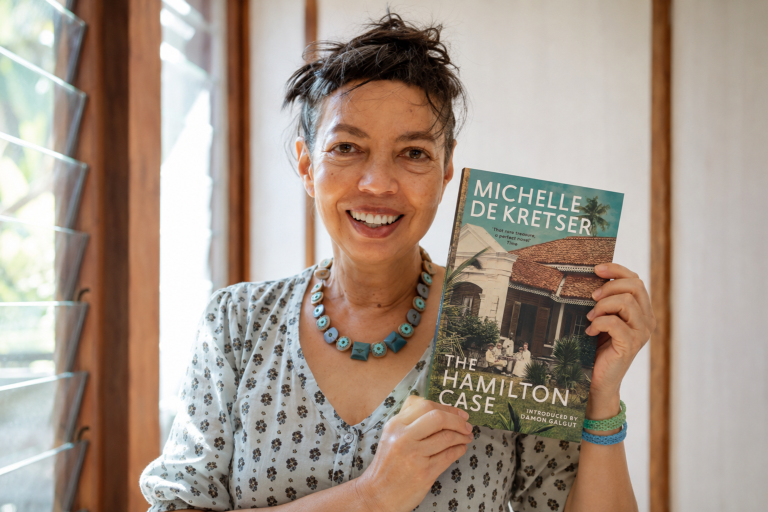
The Hamilton Case — Michelle de Kretser
Commonwealth Writers' Prize — Best Book, South-East Asia & South Pacific; Encore Award
Set in 1930s Ceylon, The Hamilton Case takes us into colonial Colombo, tea plantations, jungle, class, family and the elaborate social world of a country that is beginning to realise that the empire around it may not last forever. At its centre is a murder. But, as is often the case, the murder is only the excuse. What de Kretser really gives us is a portrait of a society—its ambitions, prejudices, anxieties and peculiarities—at the moment when one world is beginning to give way to another.
Read this before you go into the tea country.
SRI LANKA TASTED
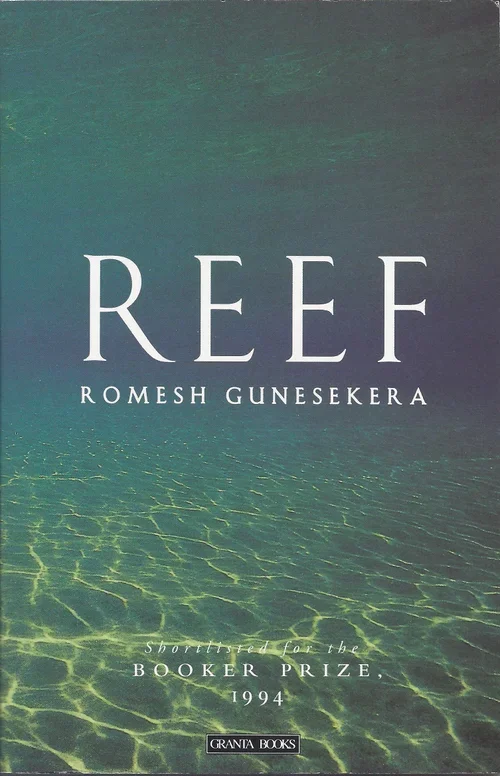
Reef — Romesh Gunesekera
Shortlisted for the Booker Prize, 1994
There are novels you read. And there are novels you almost taste. Reef is one of them.
Set around a coastal household, it follows a young boy growing up under the influence of an enigmatic cook. Food, the sea, village life, nature and the changing political landscape of Sri Lanka quietly enter the story: The kitchen carries aromas of all change. And a cook can sometimes tell you more about a society than a historian can.
Read this before heading south.
Father Cabraal's Recipe for Love Cake — Ramya Chamalie Jirasinghe
Winner, Gratiaen Prize, 2024
In Jirasinghe's wonderfully layered novel, a recipe becomes a doorway into colonial history, trade, spices, slavery, memory, home and belonging. The story moves between a contemporary Sri Lankan world and a fictionalised colonial fort reminiscent of Galle.
And yes, there is cake.
If you visit Galle Fort after reading it, I suspect you will find yourself looking at the walls rather differently too.
SRI LANKA LIVED
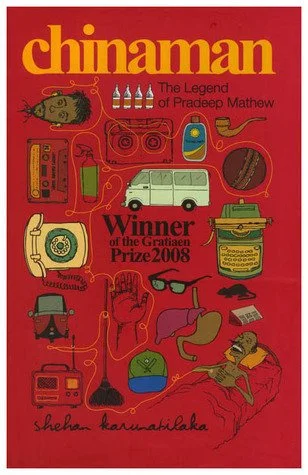
Chinaman: The Legend of Pradeep Mathew
Shehan Karunatilaka
Winner, Gratiaen Prize; DSC Prize for South Asian Literature; Commonwealth Book Prize
I am not a cricket fan, but this is one of the best books to come out of the island in my humble opinion. It is simply so much more than cricket.
In Karunatilaka's hands, the search for an elusive cricketer becomes an excuse to wander through Colombo, journalism, politics, drinking culture, corruption, memory, eccentric characters and the particular species of male conversation known locally as the "uncle".
It is funny. It is chaotic. It is occasionally outrageous.
And somewhere underneath it all is a deeply affectionate portrait of Sri Lanka.
Read this if you want more than landscape and history out of this island.
The Jam Fruit Tree — Carl Muller
Winner, Gratiaen Prize, 1993
The Burghers are one of Sri Lanka's many communities whose history is woven from several worlds at once. Carl Muller's The Jam Fruit Tree introduces us to one such family with enormous humour, affection and a cast of characters who are gloriously eccentric.
This is colonial Ceylon seen from inside a household rather than from the governor's residence.
There are family quarrels, food, gossip, eccentricity and the delicious absurdity of people trying to work out who they are in a society where everyone seems to have inherited several different histories.
It is also a useful reminder that "Sri Lankan culture" is not one thing. It never was.
Monkfish Moon — Romesh Gunesekera
Short story collection
Sometimes you don't have time for a novel.
Monkfish Moon offers a series of glimpses into Sri Lankan lives at a time of political and social change. Colombo, the coast, domestic spaces, relationships and ordinary people appear in stories that are quieter than some of the books on this list—but no less revealing.
I like short stories for travel because they allow you to dip in and out.
One at breakfast.
One on a train.
One while waiting for the rain to stop.
Sri Lanka has never been particularly good at keeping to schedules anyway.
SRI LANKA IMAGINED
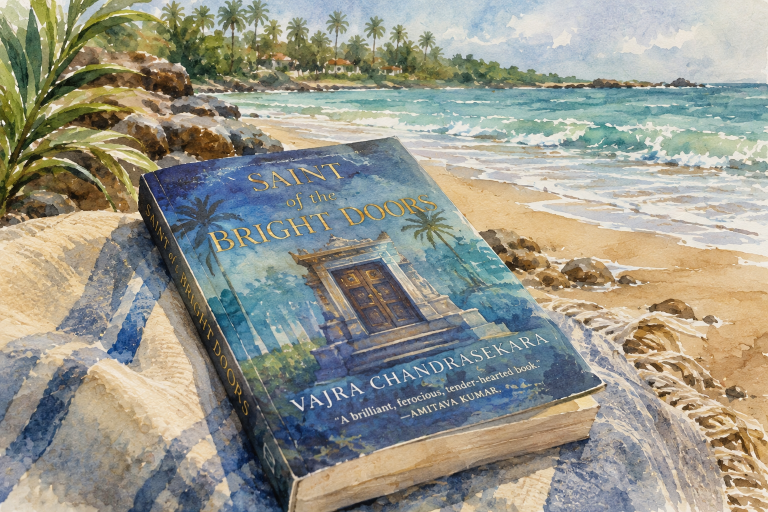
The Saint of Bright Doors — Vajra Chandrasekera
Winner, Nebula Award; Locus Award for Best First Novel; Crawford Award; Ignyte Award
Now we leave the map.
Vajra Chandrasekera's The Saint of Bright Doors is not a novel that will tell you where to find the best beaches, the oldest temple or the perfect curry. It does something much more interesting.
It asks what happens when gods, prophets, revolutionaries, bureaucracy, family history and modern urban life all occupy the same strange city.
Chandrasekera is from Colombo, and his work offers a glimpse into a contemporary Sri Lankan imagination that is not interested in presenting the island as an exotic destination or a historical curiosity.
It is stranger than that. And considerably more fun.
The Birth Lottery and Other Surprises — Shehan Karunatilaka
Short story collection
Karunatilaka's imagination does not like staying in one century.
This collection moves through Sri Lanka's past, present and possible futures, mixing absurdity, fantasy, dark humour, politics, class, violence, colonial history and everyday life.
There are stories here that are funny. Others are unsettling. Some are simply wonderfully strange.
AFTER YOU HAVE BEEN
Stories that go deeper
Some books are best read after you have seen the place they describe. Because once you have stood there, you know why you care to know more.
These are the books I would save for later.
Anil's Ghost — Michael Ondaatje
Winner, Giller Prize; Governor General's Award; Prix Médicis; Kiriyama Pacific Rim Book Prize
A forensic anthropologist returns to Sri Lanka during the civil war. Archaeology, memory, disappearance and the politics of truth come together in a novel that asks a difficult question: Who gets to decide what the past means?
After travelling through Sri Lanka, this book can be particularly powerful. You will have seen the monuments. You will have walked through the archaeological sites. You may have stood beneath ancient stupas and looked at inscriptions carved into stone.
And then Ondaatje reminds us that history is not only what survives. Sometimes it is what has disappeared.
The Seven Moons of Maali Almeida — Shehan Karunatilaka
Winner, Booker Prize, 2022
A dead war photographer wakes in a surreal afterlife with seven moons to discover who killed him.
That sentence alone should tell you that this is not going to be a conventional history lesson.
Karunatilaka approaches the violence and political turmoil of late-20th-century Sri Lanka through dark humour, fantasy, ghosts and an extraordinarily inventive narrative. The ghosts will make more sense if you read it after you finish your honeymoon with the island.
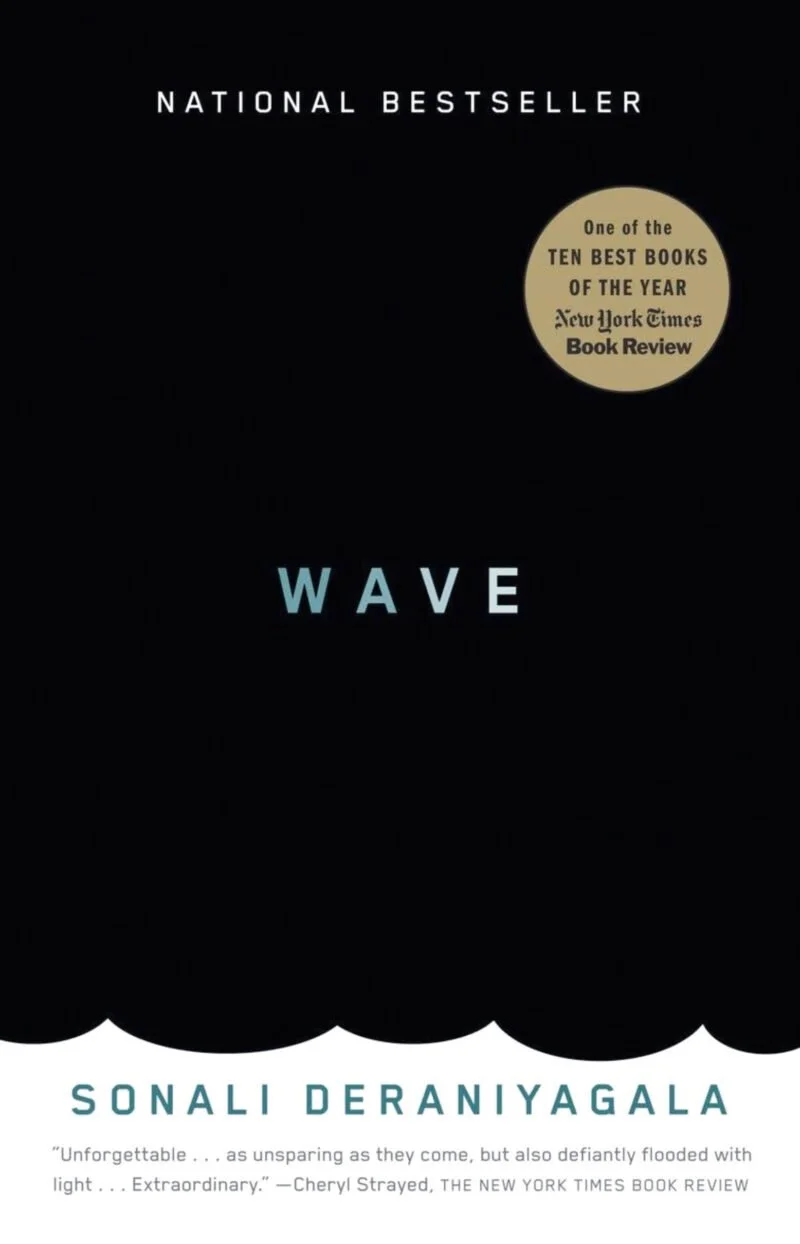
Wave — Sonali Deraniyagala
PEN/Ackerley Prize; National Book Critics Circle Award finalist
This is the difficult one. Wave is Sonali Deraniyagala's devastating memoir of losing her family in the 2004 Indian Ocean tsunami. There is no clever way to introduce it. It is a book about grief.
But it is also about landscape, memory and the strange relationship between human beings and the places we call home.
If you have spent time on Sri Lanka's southern or eastern coast, you will read the sea differently afterwards.
I would not recommend this as light holiday reading.
I would recommend it as a book for those who want to understand how deeply a landscape can inhabit a person.
Rakesfall — Vajra Chandrasekera
Winner, Ursula K. Le Guin Prize for Fiction; Otherwise Award; Nebula and Locus finalist
If The Saint of Bright Doors opens the door, Rakesfall takes you through it.
This is a much more ambitious and nonlinear work, moving across centuries, identities and realities. At its heart are two souls whose lives become entangled across time.
It begins, importantly, in a Sri Lanka marked by civil war. But it refuses to stay there.
History, myth, violence, love, power and memory become part of a much larger speculative universe.
This is not a book I would hand to someone and say, "Here is Sri Lanka."
Quite the opposite.
It is a reminder that Sri Lankan writers are not obliged to explain Sri Lanka to the rest of the world.
They are allowed to imagine anything.
A GOOD PLACE TO BEGIN?
Well, I can only share with you my favourites, but it is not a judgement. As a fan of literary fiction, I would recommend one of the following, to begin with:
Running in the Family: For memory, Ceylon and the layers of the past.
Reef: For food, place, and encounters and the complicated histories baked into everyday life.
Chinaman: For contemporary Sri Lankan humour, character and the wonderfully crooked way stories travel here.
Sri Lanka rewards the traveller who brings a book; chances are you will still be reading long after you have left the island.
